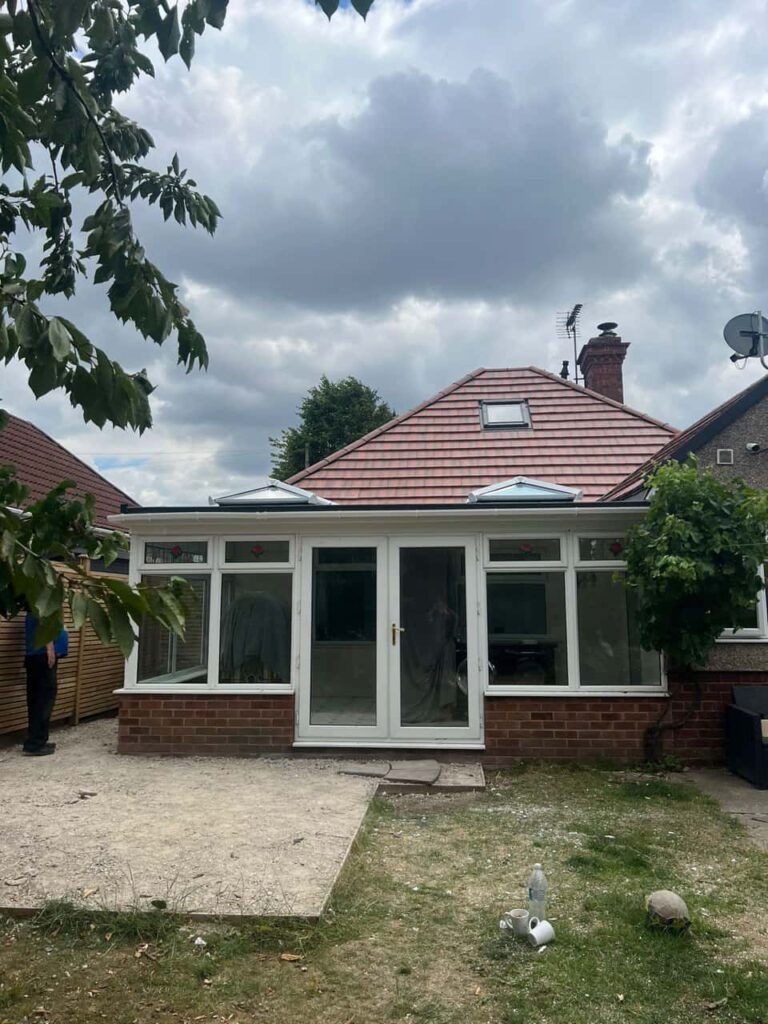
An older tiled roof does not automatically need replacing simply because it has been in place for many years. Many tiled roofs remain serviceable with appropriate maintenance and well-targeted repairs. Equally, there comes a point where repeated localised repairs may no longer address the wider condition of an ageing roof.
For property owners in Wimborne, Dorset, the important question is therefore not simply how old the roof is, but how well the complete roofing system is performing. The condition of the tiles, underlay, battens, ridge areas, flashing and other details all need to be considered alongside any history of leaks or previous repairs.
A professional roof assessment can distinguish between isolated deterioration that can reasonably be repaired and more widespread problems that may make roof replacement the more appropriate long-term approach.
How Do You Decide Between Repairing and Replacing an Older Tiled Roof?
The decision should be based on condition rather than age alone.
A roof with several decades of service may still have large areas that remain dependable, while another roof may develop widespread problems sooner because of its condition, previous maintenance and exposure.
The location and extent of deterioration are particularly important. One slipped tile is very different from repeated movement across several sections. Similarly, a single leak caused by damaged flashing presents a different situation from recurring water ingress from numerous areas.
Professional assessment looks at these differences before recommending the extent of work required.
Age Alone Does Not Mean a Tiled Roof Has Failed
It can be tempting to assume that an old roof must be approaching replacement.
However, tiled roofing systems do not suddenly become unusable when they reach a particular age. Individual components deteriorate at different rates, and maintenance history can significantly influence overall condition.
An older roof that remains aligned, weather resistant and structurally sound may still be suitable for repair when an isolated defect develops.
The age of the roof provides useful context, but its present condition should carry greater importance when deciding what work is necessary.
Isolated Tile Damage Can Often Be Repaired
A small number of cracked, slipped or damaged tiles does not necessarily indicate widespread roof failure.
Tiles can occasionally become damaged while surrounding areas remain in good condition. Where the supporting construction is sound, replacing individual defective tiles can restore the affected section without disturbing the rest of the roof unnecessarily.
However, it is important to investigate why the tiles have moved or failed.
If several tiles repeatedly slip from the same area, simply replacing them each time may overlook a problem with the fixings, battens or another part of the underlying construction.
Repeated Slipped Tiles Deserve Closer Investigation
An occasional slipped tile can represent an isolated problem. Repeated tile movement across an older roof requires more careful consideration.
If tiles continue moving despite previous repairs, there may be a reason why they are no longer remaining securely positioned.
The condition of their fixings and supporting battens may need assessment. Wider deterioration could also be affecting the stability of the roof covering.
Rather than repeatedly treating each slipped tile as a separate incident, professional inspection can determine whether the recurring problem indicates a broader weakness.
The Condition Beneath the Tiles Matters
Roof tiles are the most visible part of a tiled roof, but they are only one component of the complete system.
Beneath them are supporting elements that contribute to the roof’s overall performance. These materials are largely hidden during normal observation from ground level.
An older tiled roof can therefore appear reasonably presentable externally while containing deterioration underneath.
When defects become repetitive or several sections are causing concern, understanding the condition below the tiles becomes increasingly important when deciding between continued repair and more extensive work.
One Roof Leak Does Not Automatically Mean Replacement
Discovering a roof leak can understandably create concern, particularly when the roof is already old.
However, a single leak can have a localised cause.
A damaged tile, failed flashing detail or isolated defect may allow water to enter even though the majority of the roof remains serviceable.
Professional investigation should identify the source before conclusions are made about the entire roof.
Where the defect is confined to one area and surrounding materials remain in suitable condition, a targeted repair may provide the appropriate solution.
Recurring Leaks Can Indicate a Wider Problem
The situation changes when water ingress repeatedly develops in different areas.
If one leak is repaired only for another to appear elsewhere, the pattern may suggest that deterioration is no longer isolated.
Previous repair history becomes useful information at this stage.
A roof containing numerous patches and repeatedly developing new defects may require assessment as a complete system rather than another repair focused solely on the latest leak.
The objective should be to understand whether the roof still has a dependable underlying structure capable of supporting further localised repairs.
Water Can Travel Before Becoming Visible
The internal position of a damp patch does not necessarily reveal the location of the roofing defect.
Water can enter at one point and travel along roofing materials before becoming visible elsewhere.
This is particularly important when assessing older tiled roofs because repairing the area immediately above an internal mark may not address the source.
A methodical roof inspection can trace likely entry points and examine the surrounding covering.
Accurate diagnosis is essential before deciding whether a repair has a reasonable chance of resolving the problem.
Widespread Tile Deterioration Changes the Decision
The number and distribution of damaged tiles are important.
Replacing a few isolated tiles can be straightforward where the remaining covering is in suitable condition. If deterioration is visible throughout large sections, however, repeatedly replacing individual tiles may become less effective.
Signs can include extensive cracking, numerous slipped tiles, widespread surface deterioration or repeated defects across different roof slopes.
At this stage, the question becomes whether the roof covering remains dependable as a whole.
A professional assessment can determine whether localised repairs are still proportionate or whether renewal should be considered.
Ridge Areas Need to Be Included in the Assessment
The ridge is an important part of a pitched tiled roof and should not be overlooked when evaluating an ageing roof.
Movement, cracking or deterioration around ridge areas can create weaknesses even where the main roof slopes remain relatively sound.
Problems concentrated around the ridge may be repairable without replacing the complete roof.
However, where ridge deterioration exists alongside widespread problems elsewhere, it contributes to the overall picture of the roof’s condition.
Assessing all areas together helps avoid making a decision based on one visible defect alone.
Flashing Problems Can Be Localised
Older roofs frequently contain junctions where different materials meet, and these areas can sometimes become sources of water ingress.
Flashing may deteriorate, move or become less effective over time.
A leak associated with a localised flashing defect does not necessarily indicate that the tiled roof covering itself requires replacement.
Repairing or renewing the defective detail may restore weather resistance where the surrounding roof remains sound.
This is another reason why accurate diagnosis should come before deciding that an old roof has reached the point of replacement.
Sagging or Significant Changes in Roofline Need Attention
Changes in the shape or alignment of a roof can be more significant than an isolated broken tile.
A roofline that appears noticeably uneven, dipped or distorted should be professionally assessed to establish what is causing the change.
These symptoms may indicate issues involving supporting components rather than simply the external covering.
Adding new tiles or repeatedly repairing the visible surface without understanding the underlying reason would not provide a complete solution.
Where structural or supporting deterioration is involved, the scope of work may need to be broader.
Previous Repairs Tell Part of the Story
The repair history of an older roof can provide valuable information about its overall reliability.
A roof that has required one or two isolated repairs over a long period presents a very different situation from one that needs attention repeatedly.
Consider whether:
- Repairs are becoming increasingly frequent
- The same areas continue to fail
- New problems regularly appear in different locations
- Numerous sections have already been patched
- Leaks continue despite previous work
- Tile movement is becoming widespread
- Several roofing components are deteriorating together
A pattern of recurring defects can indicate that assessing the complete roof is more appropriate than continuing to treat each problem individually.
Good Repairs Should Address the Cause
Effective roof repair involves more than replacing whatever component appears damaged.
If a tile has slipped, it is worth understanding why. If water is entering, the entry point needs to be found. If one section repeatedly deteriorates, the condition underneath should be considered.
Without this investigation, repairs can become repetitive.
Professional roof repairs should aim to correct the underlying defect where possible rather than simply improving the visible symptom.
This approach is particularly important for older roofs because several components may have experienced decades of exposure and use.
When Repair Is Often the Appropriate Choice
Repair can remain a sensible approach when the problem is clearly localised and the surrounding roof is still performing effectively.
Examples can include:
- A small number of damaged tiles
- An isolated slipped tile
- Localised flashing deterioration
- A specific leak with an identifiable source
- Limited ridge deterioration
- A small damaged section surrounded by sound roofing
The key factor is that the defect should be genuinely local rather than one visible symptom of widespread deterioration.
Where this is the case, targeted repair can preserve the serviceable parts of the existing roof.
When Replacement May Become More Appropriate
Replacement deserves consideration when problems are widespread or the roof has reached a stage where local repairs no longer provide dependable results.
This can include circumstances where numerous areas are deteriorating simultaneously, leaks repeatedly develop in different locations or underlying components have become extensively degraded.
Replacement may also become more appropriate where previous repairs have created a heavily patched roof but new defects continue appearing.
The decision should not be based simply on appearance.
It should follow an assessment of whether the existing roof remains a reliable foundation for further repairs.
Replacing Only Because a Roof Looks Old Can Be Unnecessary
Older tiles naturally develop changes in appearance.
Weathering, surface marks and differences in colour do not automatically indicate that a roof has failed.
A roof can look aged while continuing to perform its primary function effectively.
Conversely, a roof that appears relatively tidy from ground level may contain hidden weaknesses.
This is why visual appearance alone is an unreliable basis for deciding between repair and replacement.
Condition and performance provide much more useful information.
Repeated Temporary Patching Can Hide the Bigger Picture
Local patching has an important role when dealing with genuine isolated defects.
Problems arise when repeated patches become the default response to continuing deterioration.
If different parts of an older tiled roof require frequent attention, another isolated repair may only postpone consideration of the wider condition.
At this stage, a complete assessment can establish whether the roof remains suitable for continued maintenance or whether broader renewal would provide a more appropriate solution.
Roof Replacement Can Address Several Ageing Components Together
Where an older roof has widespread deterioration, replacement provides an opportunity to address the roofing system more comprehensively.
Rather than continuing to deal separately with recurring tile movement, deteriorated supporting components and multiple weather-resistant details, the roof can be considered as a complete construction.
This does not mean replacement should automatically be recommended for every ageing roof.
It means that once deterioration becomes widespread, assessing the whole system can provide a more logical basis for deciding what work is required.
Why Professional Roof Assessment Matters
Choosing between roof repair and replacement is ultimately a condition-based decision.
A professional assessment can examine the relationship between visible defects and the wider roofing system.
Important factors include:
- The overall condition of the roof tiles
- The number and distribution of defects
- Evidence of previous repairs
- The frequency of water ingress
- The condition of ridge areas
- Flashing and roof junctions
- Signs of movement or changes in alignment
- The condition of supporting materials where assessable
- Whether deterioration is isolated or widespread
Considering these factors together provides a much clearer picture than simply using the roof’s age as the deciding factor.
Professional Tiled Roof Repairs in Wimborne, Dorset
At MCM Roofing Repairs Wimborne, we understand that older tiled roofs need to be assessed individually.
Some ageing roofs remain suitable for targeted repairs, while others develop broader deterioration that makes more extensive work worth considering. The important step is identifying which situation applies before deciding how to proceed.
For property owners in Wimborne, Dorset, a professional roof assessment can establish the extent of deterioration, identify the source of recurring problems and determine whether repairing the existing tiled roof remains an appropriate approach.
Conclusion
An older tiled roof should be repaired when defects remain localised and the wider roofing system continues to perform effectively. Individual damaged tiles, isolated flashing problems and specific leaks can often be addressed without unnecessary replacement.
Replacement becomes more relevant when deterioration is widespread, leaks repeatedly develop in different locations, supporting components are extensively affected or previous repairs are no longer providing dependable results.
Age is therefore only part of the decision. The condition, reliability and repair history of the complete roof provide far more useful information.
If you have an older tiled roof in Wimborne, Dorset and are unsure whether it needs repair or more extensive attention, contact MCM Roofing Repairs Wimborne. We can assess the roof’s condition, identify the areas causing concern and recommend an appropriate approach based on what the roof actually requires.
Call us on: 01202 149 796
Click here to find out more about MCM Roofing Repairs Wimborne
Click here to complete our contact form and see how we can help with your roofing needs.